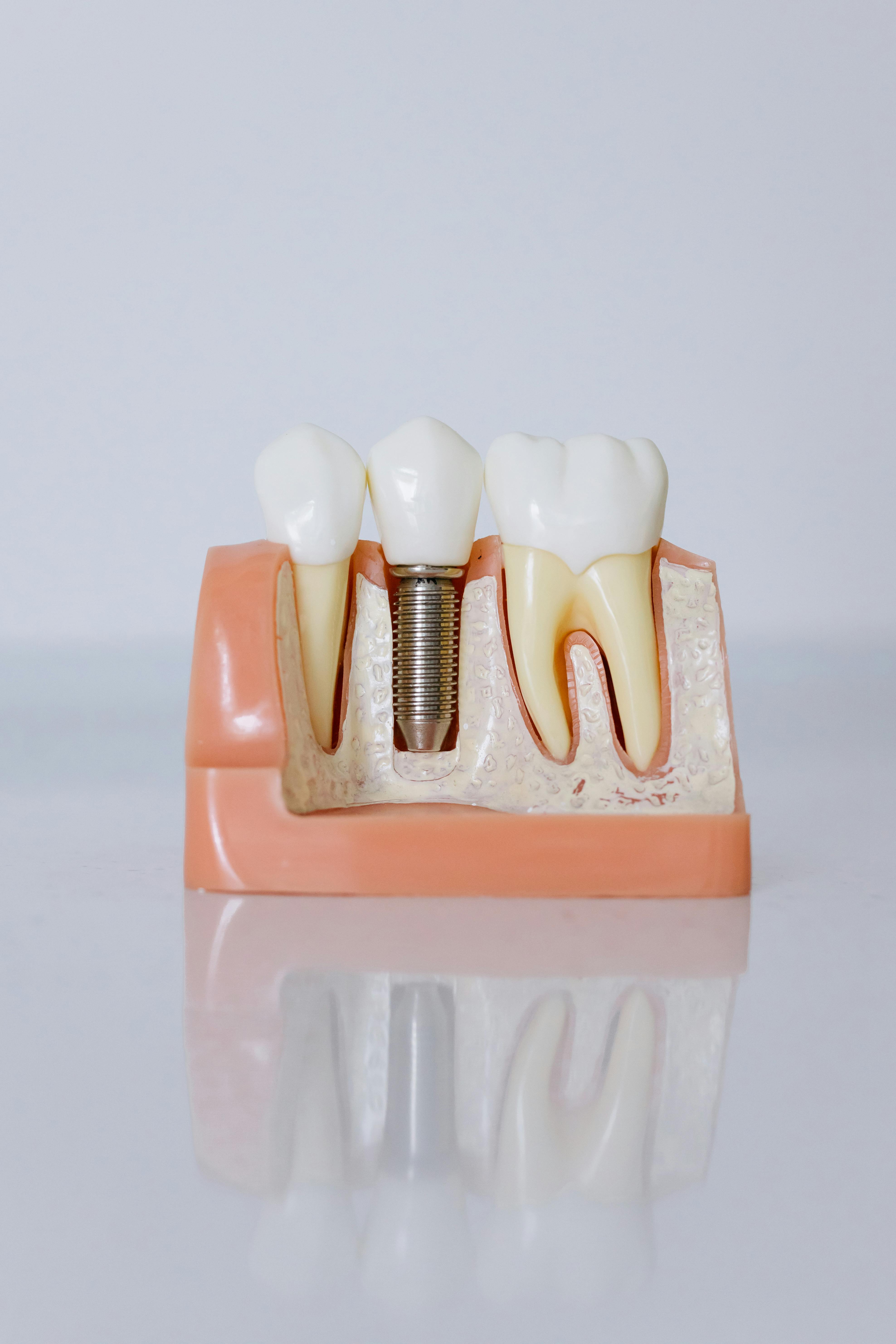
Reasons for replacing a missing tooth (or teeth) vary and should be weighed against the risks of leaving the space, as well as resultant changes that may take place in the rest of your dentition.
Bone loss When teeth are removed from the jaw, the bone that supports the teeth tends to shrink over time. This process is called resorption and is a natural consequence of the loss of stimulation to the bone from the forces placed on the teeth. Resorption of the alveolar bone (bone that supports the teeth) begins almost as soon as the tooth is removed and proceeds over time. The bone will lose both height and width from resorption.
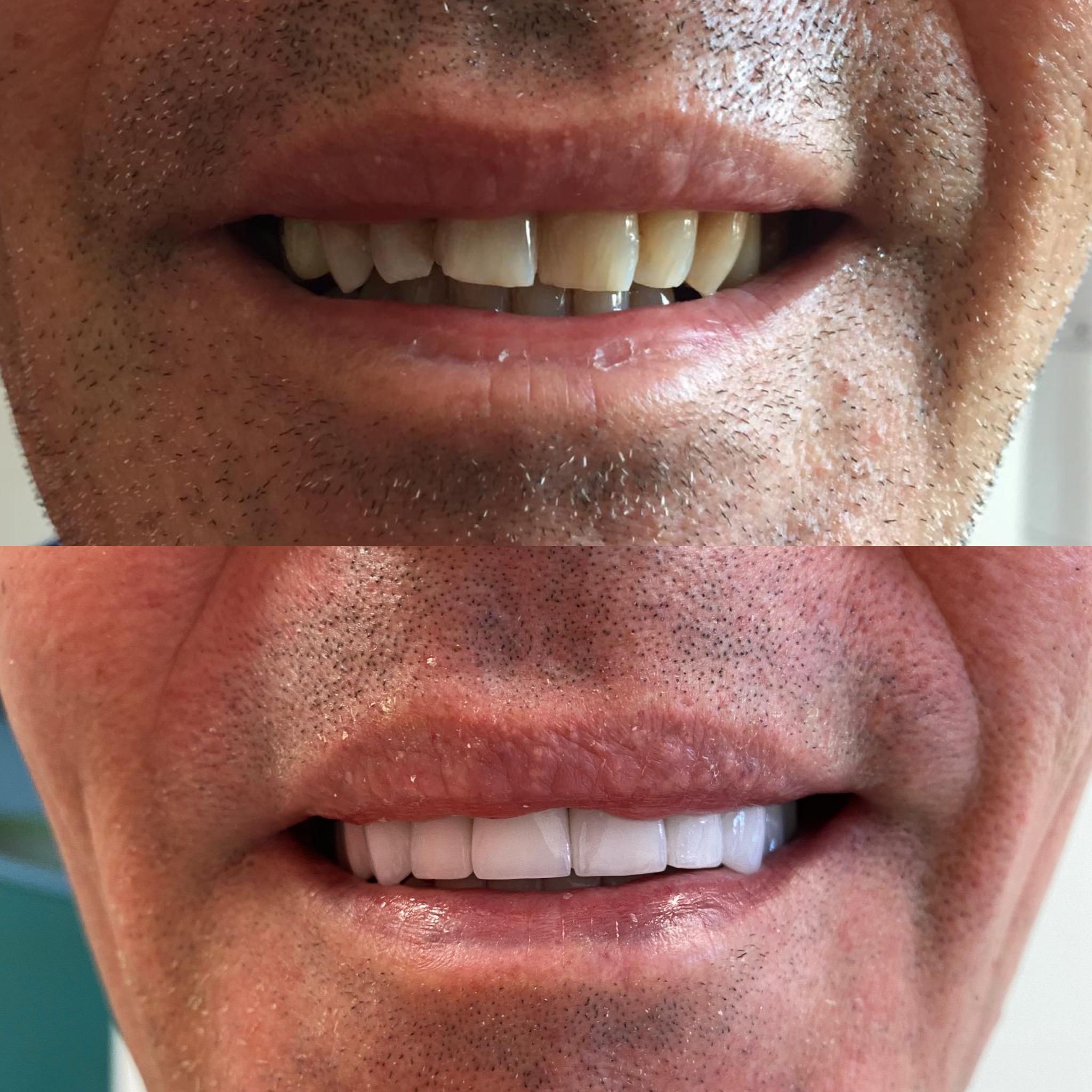
When multiple teeth are lost, with or without a prosthesis to replace them, significant loss of jaw bone can take place. This sometimes leads to difficulty wearing a removable denture due to lack of an adequate "ridge" upon which the denture can obtain stability. In the so-called "esthetic zone" of the mouth, where loss of ridge volume can be visibly apparent to the naked eye, this can lead to a cosmetic defect.
As the bone resorbs, the gum which covers it also shrinks away, creating a concavity (depression in height and width) that can be unsightly as well as possibly promote food impaction under adjacent teeth.
Drifting In general, our teeth have a constant tendency to move both towards the front of our mouths and towards the opposing jaw, unless they are stopped by something in their way, usually the adjacent or opposing teeth. Loss of teeth allows this to proceed in a pathologic way.
As teeth drift, they create discrepancies in the height and contours of the gum tissue that predispose adjacent teeth to periodontal disease progression and/or dental decay from accumulation of food and plaque and difficulty in cleaning these areas from "piled-up" gum tissue. Drifting teeth can also adversely affect the occlusion (bite), as well as cosmetics of your face and smile.
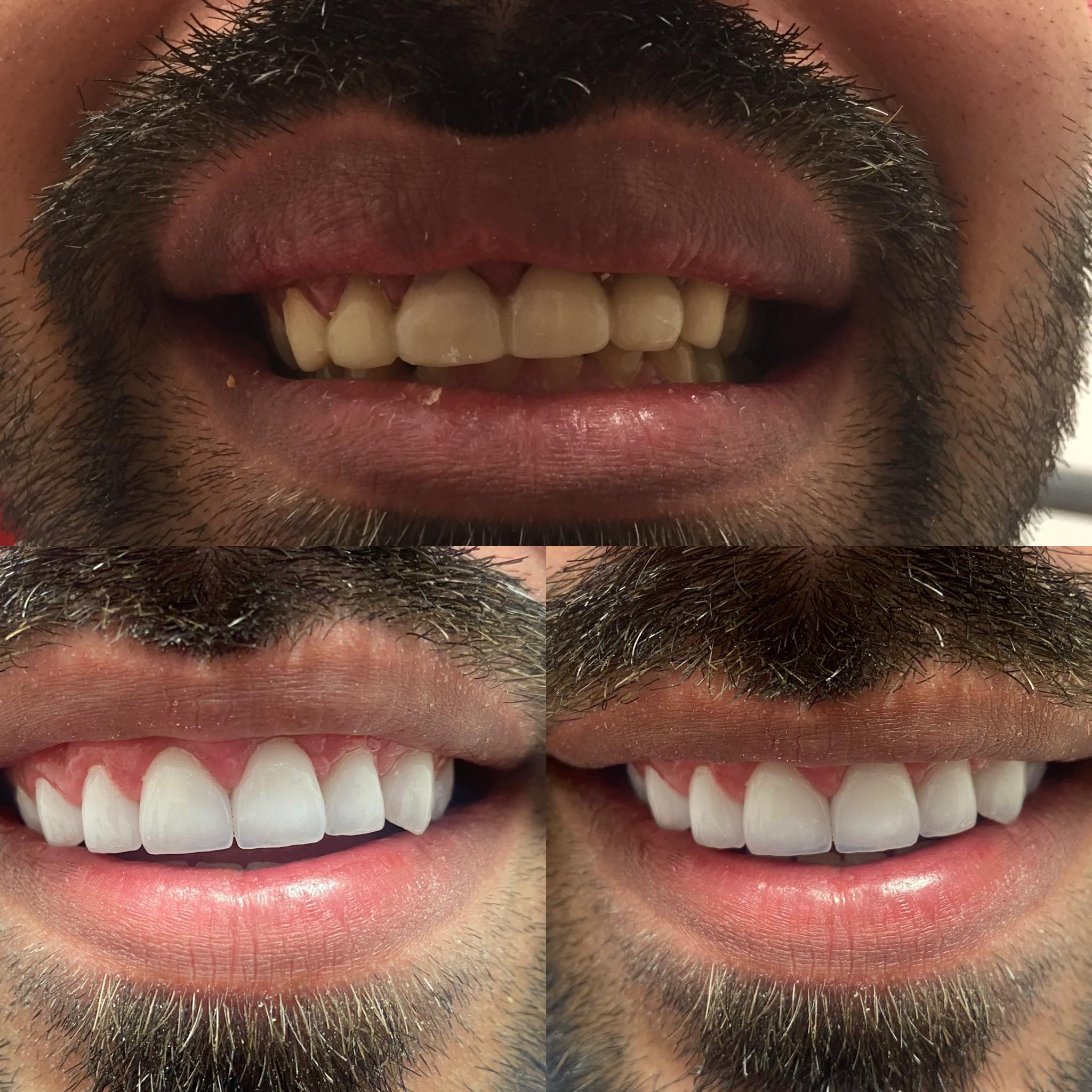
We at Crystal dental clinic, recommend that every missing tooth has to be replaced within half a year after losing or missing it.

.png)
















.png)









.png)